
The Hardest Client You'll Ever Have Is Yourself
High standards — the same standards that make you good at your job — create paralysis when turned inward. Research consistently shows that perfectionism triggers procrastination, not quality. You're holding your own work to an impossible standard that you'd never apply to a client's, and so nothing ever feels ready enough to publish.

You can build a brand strategy for a client in an afternoon. You know how to find the story, write the copy, figure out the voice, and make something that actually resonates. You've done it dozens of times. And then you go to do the same thing for yourself and you just... stall.
The cursor blinks. You open a new draft. You close it. You tell yourself you'll do it tomorrow when you have a clearer idea, more time, better energy. Tomorrow becomes a pile of tomorrows. Your feed goes quiet. And meanwhile you're doing brilliant work for everyone else.
This is not a discipline problem. It's a psychology problem. And it's almost embarrassingly common in the creative industry.
Here's what's actually happening.
High standards — the same standards that make you good at your job — create paralysis when turned inward. Research consistently shows that perfectionism triggers procrastination, not quality. You're holding your own work to an impossible standard that you'd never apply to a client's, and so nothing ever feels ready enough to publish. Done is better than perfect. You know this. It's much harder to believe it when you're the subject.
Then there's the imposter syndrome, which is louder for creatives than for almost any other industry. 87% of creative professionals report experiencing it. You spend your days telling other people's stories with confidence and authority, and then you turn the camera on yourself and suddenly you're not sure you have anything worth saying. The voice that tells you you're not qualified, not interesting, not ready — it's lying. But it's loud.
Underneath both of those things, a lot of the time, is just exhaustion. Not laziness. Creative burnout hit 70% of creative professionals last year. When you've spent your best hours building things for clients, your own work gets whatever's left — which is often nothing. Your brain isn't being difficult. It's protecting you from running completely empty.
And there's one more piece that doesn't get talked about enough: creative blind spots. You can capture the soul of a subject in a photograph. You can write copy that makes someone feel understood. But sit down to write your own "About Me" and you go completely blank. Describing yourself with the same skill you bring to everyone else feels almost neurologically impossible. You are too close to it.
Here's the reframe: you deserve the same quality of attention you give your best clients. Not the scraps at the end of the day. Not the "I'll get to it eventually." Your own brand, your own story, your own presence in the world — that's a client worth showing up for.
Treat yourself like it.
Stop Making Marketing Harder Than It Needs to Be
At some point, marketing became this enormous, anxiety-producing thing. There are entire industries built around making you feel like you're doing it wrong, like you need more tools, more strategy, more budget before you can start. You don't.
At some point, marketing became this enormous, anxiety-producing thing. There are entire industries built around making you feel like you're doing it wrong, like you need more tools, more strategy, more budget before you can start. You don't.
Here's what actually works, stripped down to the basics.
Know your audience so well you could guess their weird coffee order. This sounds glib but it's not. Vague audiences produce vague content. When you know exactly who you're talking to — what they care about, what keeps them up at night, what makes them feel seen — everything gets easier. You stop marketing to ghosts and start talking to people.
Be the weird, authentic version of yourself. People can smell "salesy" from a mile away. They've been marketed to their whole lives and they're good at detecting the performance. What they can't ignore is genuine. Your specific point of view, your actual personality, your real opinions about things — that's what attracts your people. Your vibe finds your tribe, not the other way around.
Done beats perfect every single time. This is the one most people know and still refuse to accept. The post you don't publish helps nobody. The imperfect caption you hit send on at least existed in the world. Stop staring at the post button. Just hit it. Consistency compounds in a way that occasional brilliance never will.
Make people stop scrolling. This is the bar: if you wouldn't pause on your own post, don't put it out. Not because every piece of content needs to be a masterpiece, but because you should have some reason for making it — some small thing that makes it worth the few seconds of someone's attention. If you can't find that thing, keep working.
And when you've actually done good work? Let your fans say so. Your five-star reviews and testimonials are your most credible salespeople. They're not bragging — they're proof. Use them relentlessly, everywhere.
That's it. That's the whole crash course.
A Quick Guide to Being Polite as F*ck
Basic decency has become surprisingly countercultural. Which means if you just... do it, you stand out.
Basic decency has become surprisingly countercultural. Which means if you just... do it, you stand out.
We're not talking grand gestures. We're talking the small stuff that most people have quietly stopped bothering with. The frictions of daily life that, if you push back against them intentionally, make the whole day feel different — for you and for whoever's on the receiving end.
So here's a short, unsentimental guide.
Wield "please" and "thank you" like weapons. Seriously. Use them with the cashier, the barista, the person on the other end of the customer service call who definitely didn't personally cause your problem. These words cost nothing and they land differently than people expect. That's the point.
Let people finish their sentences. Even when you already know where it's going. Even when it's taking longer than it should. Even when — especially when — you think what they're saying is wrong. There is a particular kind of respect in waiting. It signals: you're worth my full attention. Most people don't receive that very often.
Hold the door. Make eye contact when you smile. This sounds so small it's almost embarrassing to write down, but the razzle dazzle is real — a genuine moment of acknowledgment with a stranger is not nothing. It's a tiny rupture in the anonymous noise of getting through the day.
Then there's the compliment. Not the reflexive "love your top!" variety. A specific one — the kind that makes someone stop and actually believe it because you clearly noticed something real. "The way you explained that to the new person was genuinely patient" hits differently than "great job today."
And last: be so relentlessly, consistently, specifically nice that it starts to feel a little unsettling. Not performative. Not aggressive. Just steady. The kind of polite that people remember and can't quite explain.
It's not complicated.Just decide to do it.
Community Is Good Business
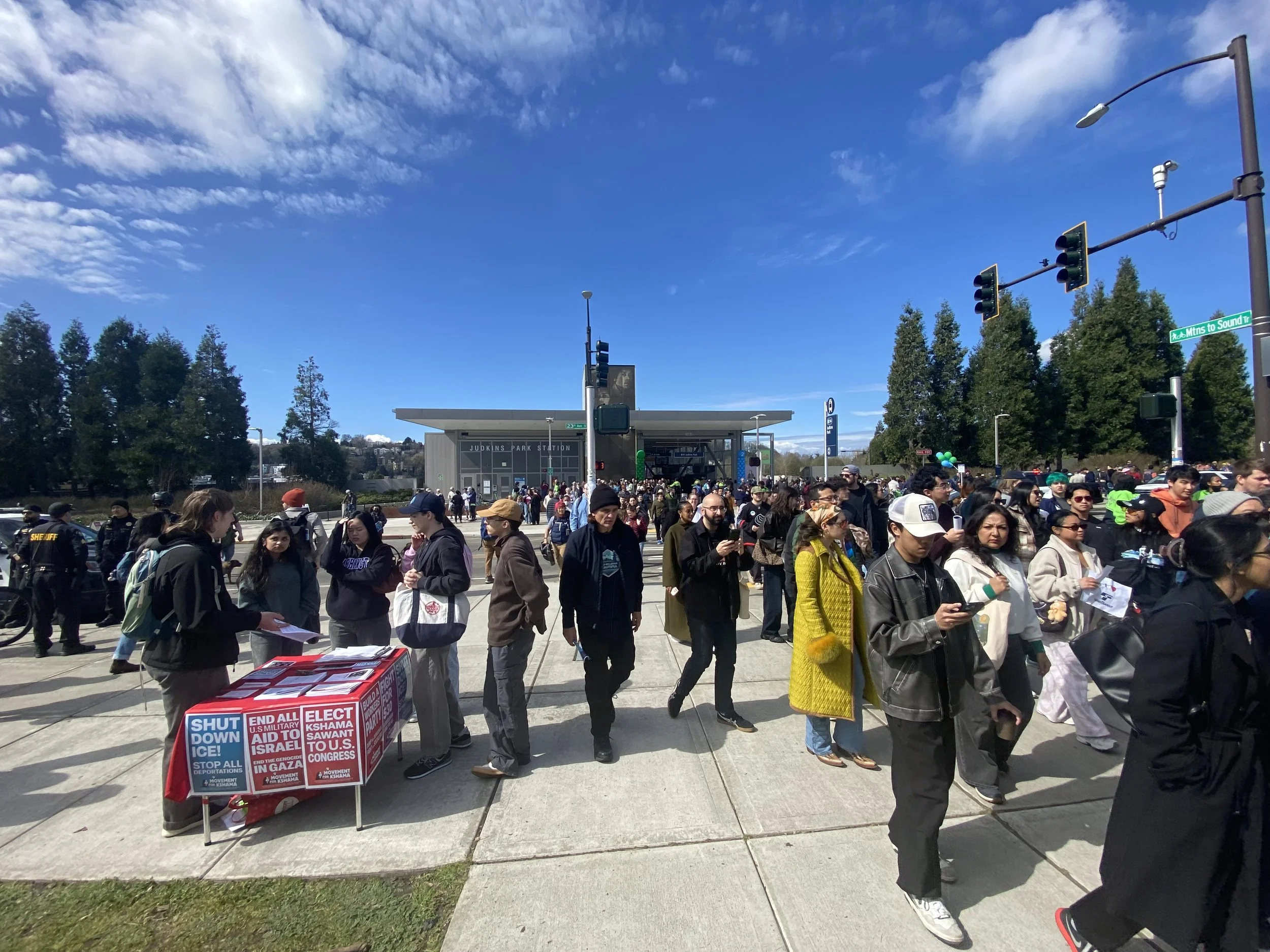
There's a version of business that treats community like a marketing checkbox. Sponsor a local event, post about it, move on. Technically present, fundamentally absent. And people can tell.
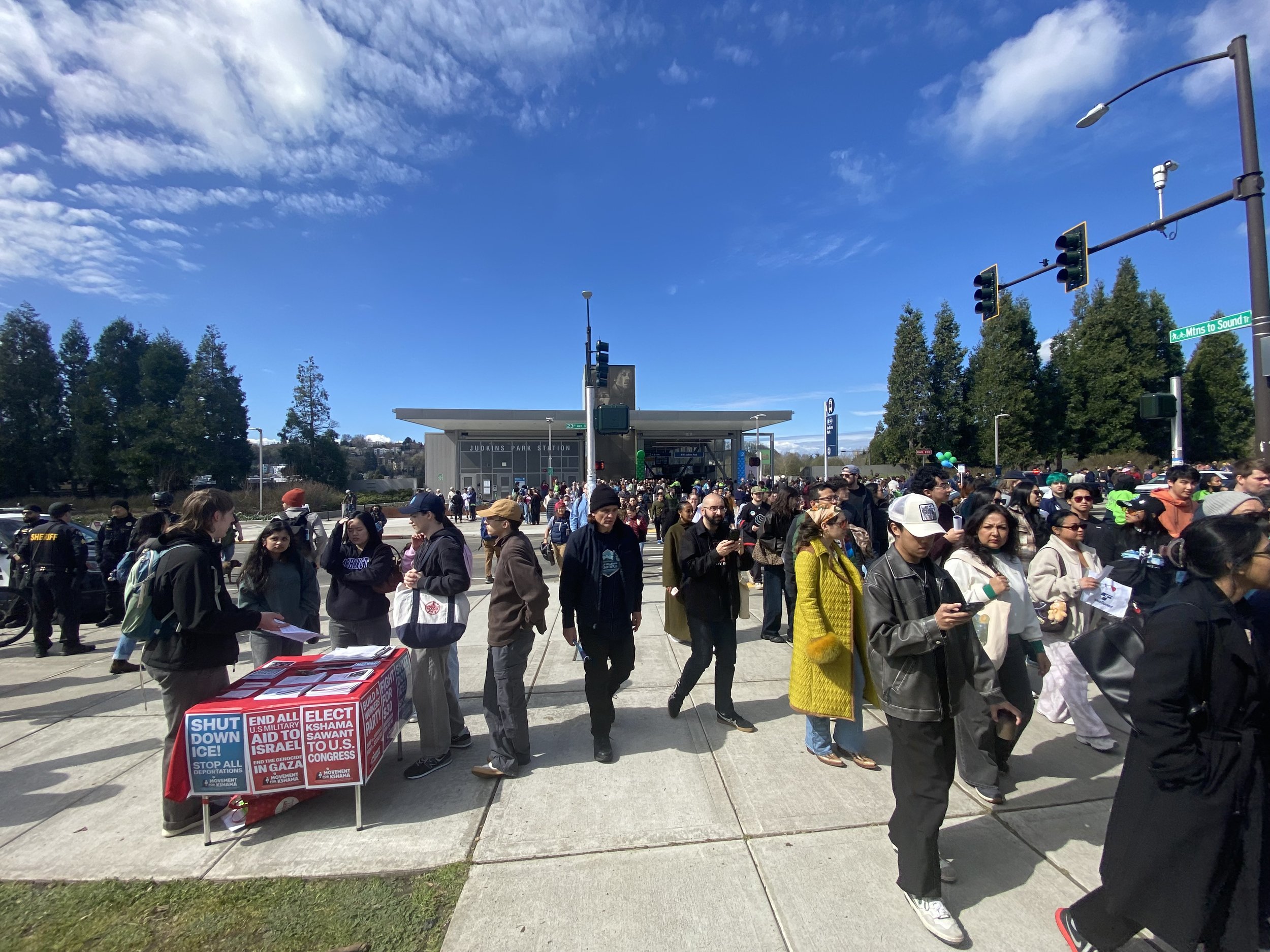
There's a version of business that treats community like a marketing checkbox. Sponsor a local event, post about it, move on. Technically present, fundamentally absent. And people can tell.
We've built Northwest Polite Society on a different premise: when your community thrives, you thrive. Not as a tagline. As an actual operating principle that shapes how we show up for clients and neighbors alike. Here's what that actually looks like in practice.
Listen like a neighbor. Not like a brand conducting a focus group. Your customers are telling you what they need constantly — in feedback, in complaints, in the stories they share. The businesses that hear it are the ones that treat listening as a core competency, not a quarterly survey.
The ones that last, though — the ones that become genuinely embedded in a place — go further. They learn names. They remember that someone's kid just started school or that a regular is going through something hard. A strong community isn't transactional. It's personal. You build the relationship, not just the sale.
Being local isn't solely about your zip code. It's showing up when it matters — supporting neighborhood events, partnering with other small businesses, putting your weight behind community causes. There's a difference between being located in an area and being invested in it.
Then there's the physical reality of your space, whether that's a storefront, a studio, or a corner of the internet you've claimed as your own. A welcoming environment does something a good ad campaign can't: it turns customers into regulars, and regulars into community. People come back to places where they felt something. Where they felt seen.
And finally — give back. Find the causes your customers actually care about and get behind them. Real loyalty is earned through shared values. When your community wins, you win too.
Community isn't a strategy you layer on top of your business. It is the business.

The Dual Narrative Marketing Strategy
The best marketing campaigns are often invisible. They don't feel like marketing — they feel like your world, your values, your community confirming what you already believe. Behind that seamless feeling is a deliberate set of techniques designed to reach different audiences with different messages, at the same time, from the same source. We call it the Dual Narrative Marketing Strategy.
How Brands Tell Different Stories to Different People at the Same Time

You and a friend follow the same brand. You both see their content regularly. But somehow you've landed in completely different places — one of you trusts them, one of you is skeptical, and neither of you fully understands why the other feels that way.
It's not an accident. It's architecture.
The best marketing campaigns are often invisible. They feel like your world, your values, your community confirming what you already believe. Behind that feeling is a deliberate set of techniques designed to reach different audiences with different messages, at the same time, from the same source. We call it the Dual Narrative Marketing Strategy.
Here are five of the most common methods used to pull it off:
Algorithmic Micro-Targeting and Content Funneling
A brand creates two distinct types of content — "Content A" for one demographic, "Content B" for another. Paid advertising does the sorting. Audience A almost exclusively sees Content A. Audience B sees Content B. Over time, each audience gets funneled into a separate content ecosystem, building a completely different perception of the same source. Same brand, two parallel realities.
Coded Language and Dog Whistles
The general audience hears something benign. Generic, even. But the intended demographic hears a message that confirms their specific beliefs, values, or biases. This gives the storyteller the ability to communicate a controversial idea to a receptive audience while maintaining plausible deniability with everyone else. The language works on two levels simultaneously — and only one group knows it.
Selective Emphasis and Omission
One audience is consistently shown content that highlights positive attributes. Another is either shown nothing at all, or exposed to content that surfaces the negatives. Each audience builds their understanding of the brand from a completely different set of curated facts. Nobody's being outright lied to. But nobody's getting the full picture either.
Leveraging Different Messengers and Influencers
The same core message gets handed to different influencers to translate for different communities. What resonates with one group — the voice, the framing, the cultural references — often doesn't land at all with another. So instead of one spokesperson, you get a distributed network of translators, each one speaking fluently to their own audience. The message stays consistent. The delivery changes completely.
"Dark Posts" and Exclusive Content Communities
The private story gets shared only with a pre-qualified audience that's already deeply aligned with the message. It strengthens in-group identity and community bonds while staying completely invisible to the general public. No public post, no broad reach — just the right message landing quietly in the right room.
The uncomfortable truth is that knowing these techniques exist is only the first step. They're effective precisely because they don't feel like manipulation — they feel like relevance. Like the brand just gets you.
That's the whole point.
So the next time a brand feels perfectly aligned with your worldview, it's worth asking: is this genuine connection, or is this just very good targeting? The more fluent you get in these tools, the harder it is to be a passive audience. And that's probably worth something.
Northwest Polite Society is a Seattle-based marketing agency specializing in street, out-of-home, experiential, and social media. We've been embedded in this community long enough to know how the game works — and to help our clients play it with integrity.